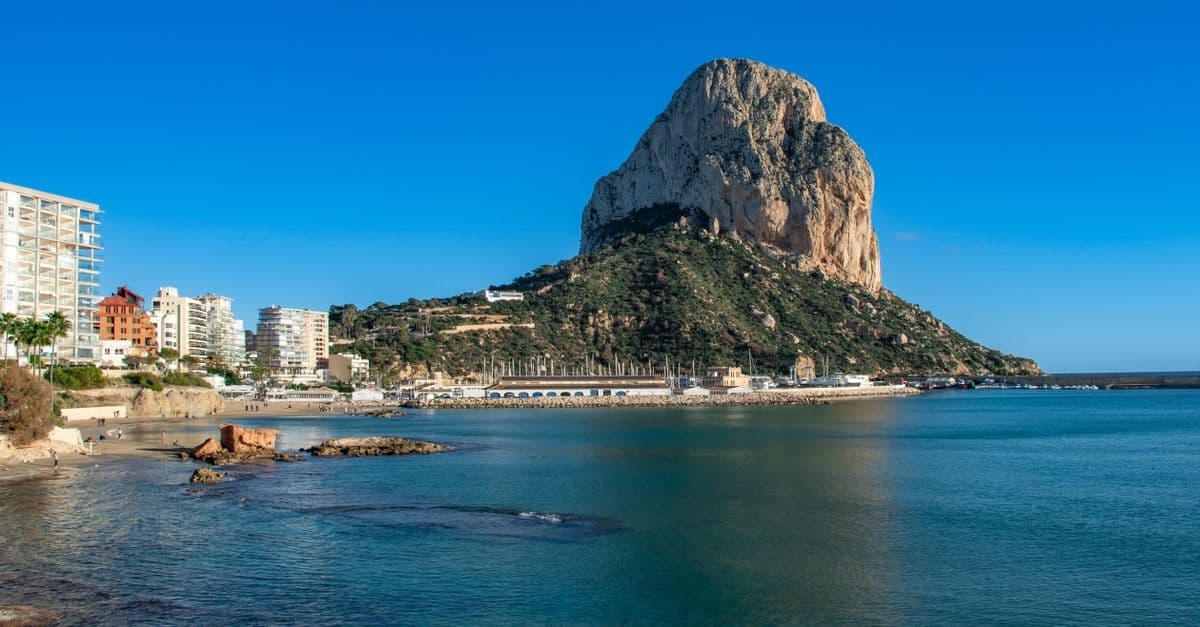
Most people arrive at the Costa Blanca thinking: “the coast is cheap — I can stretch my money further than at home.” That’s the mistake. The Costa Blanca is a long strip with cheap corners and expensive corners. Treating it as a single market is what leads to a hurried purchase in the wrong town or paying a premium for views you’ll never use.
What living here actually feels like
The Costa Blanca runs roughly from Denia and Jávea in the north, down through Alicante city, to Torrevieja and the Orihuela Costa in the south. Within that ribbon you get noisy tourist beaches, sleepy fishing towns, dense apartment strips, and inland villages with microclimates. Summers are hot and crowded — expect July and August to be lively and loud in the resorts. Winters are mild but quieter than the brochures suggest: many seasonal restaurants close and some urbanisations empty out.
Daily life depends on where you land. In Benidorm or Alicante city you’ll find English-speaking shops, private clinics and international supermarkets. In smaller towns such as Villajoyosa or El Campello you’ll rely more on Spanish services and local bars. Public transport exists — trains along the coast and buses — but to be fully independent you’ll probably want a car unless you live within walking distance of everything.
What your budget buys (approx. ranges as of 2026)
These are market-style ranges you can expect right now, useful for scoping your search. I’m giving broad bands and concrete examples so you can picture a property rather than only a price-per-square-metre number. Always check current listings before you decide.
Under €150,000 — entry-level
- What you’ll usually get: small one-bedroom apartments or studio flats, often inland or in older blocks near Torrevieja, Santa Pola or parts of Alicante city. Expect compact layouts and a bit of renovation needed.
- Where it works: Torrevieja, Pilar de la Horadada, parts of Guardamar. Good for holidays, short winters or cash buyers who can renovate.
- Watch out for: high community fees relative to the size, older plumbing, and apartments that face busy roads.
€150,000–€300,000 — the most practical band for retirees
- What you’ll usually get: a 1–2 bedroom apartment with beach access or a small townhouse. In Alicante or Elche you can find modern two-beds; on Orihuela Costa or Cabo Roig you’ll find newer complexes with pools.
- Where it works: Alicante outskirts, Orihuela Costa, parts of Denia (apartments), and Gran Alacant. This is the sweet spot for people who want comfort, a manageable budget and decent resale options.
- Expect to pay a little more for sea views or proximity to international schools and clinics.
€300,000–€600,000 — room, comfort and better locations
- What you’ll usually get: roomy two- or three-bedroom apartments in central Alicante, modern villas or townhouses inland, or sea-view apartments in Javea, Altea and north Denia if you shop carefully.
- Where it works: Jávea/Xàbia (second-hand), Altea if you accept a smaller house, and much of the mid-range market in the Marina Alta and Baixa.
- Why people choose this band: you get space, better construction, and properties that appeal to buyers year-round — helpful for resale.
€600,000 and up: the prime end
- What you’ll usually get: large villas with private pools, panoramic sea views, or recently built luxury apartments in Altea, Moraira, and prime Javea plots.
- Where it works: Altea, luxury corners of Jávea and Denia, and inland fincas with acreage. These locations keep their value and attract international buyers.
Price-per-square-metre varies dramatically inside these bands. An apartment with sea views in Altea can cost double the same-size unit 10 minutes inland. If your main worry is the budget, decide first which three towns you'd consider, then compare the exact streets.
Day-to-day costs and running the home
If you’re comparing to where you live now, remember two big toggles: community fees and seasonal utility consumption.
- Community fees (for complexes with gardens/pools): typically €50–€250 a month. A pool and lift push you toward the top end — a small block with no amenities sits at the bottom. See our explainer on community fees here.
- Utilities: expect €60–€120 monthly for a modest 2-bed outside summer; air conditioning in July/August can double that if you use it heavily. Heating in winter is usually mild and costs are moderate unless you have an old, poorly insulated villa (then budget for upgrades; more on winter heating here).
- Local living costs: a café in town is €1.50–€2.50, a mid-range restaurant meal €12–€25 per person, groceries for a couple roughly €250–€350 a month depending on habits.
- Property taxes and purchase costs: add roughly 10–13% on top of the purchase price for taxes, notary, land registry and typical fees. For exact tax questions check the tax agency agenciatributaria.es.
Healthcare and registering as a resident
If you plan to retire here full-time, healthcare access is a make-or-break. The Valencian public system is good — but you don’t get it automatically. First you have to register locally (empadronamiento) and then get your social security registration or be a registered resident to access the regional health card.
If you arrive on a non-lucrative visa you’ll need private health insurance that meets visa rules at the time of application; consulates check these policies strictly. Expect higher premiums the older you are: in 2026 a healthy 60–70 year-old should budget roughly €100–€250 per month for a policy that consulates accept. Private insurer differences matter — we compare Sanitas and Adeslas elsewhere here.
Once you’re resident and on the padrón you can also register with the regional health service (Servicio Valenciano de Salud). For social security and detailed procedures see seg-social.es.
Regional, consular and provider differences and why they matter
Two mistakes I see regularly: ignoring the consulate that will process your visa and assuming health/property taxes are identical up the coast. They aren’t.
- Consulates: Non-lucrative visa rules are national, but processing times, appointment availability and the way an individual consulate reads bank evidence vary. The Valencia consulate area behaves differently to Madrid or Barcelona for appointment timings. If you need a visa, pick your consulate strategically, as faster processing can save months of hotel rent.
- Regional taxes and fees: Spain’s autonomous regions set several property-related taxes and incentives. While the Valencian Community covers most of the Costa Blanca, a few nearby municipalities fall into Murcia or different provincial tax frameworks — that affects transfer taxes, IBI rates and possible exemptions. Confirm with the tax office before signing; start at agenciatributaria.es for national matters and ask the local ayuntamiento for municipal rates.
- Healthcare providers and GP access: private insurance providers set their own waiting rules for specialist care and imaging. If you need particular specialists, check local clinic lists. The north coast around Denia and Jávea has several English-speaking doctors; further south you’ll find more British-run clinics in Benidorm and Orihuela Costa.