Short answer: which Costa Blanca towns are best for retirees?
If you want the easiest life with English services, pick the Alicante / Elche corridor or Torrevieja. If you want prettier streets, quieter beaches and are happy to pay more, choose Jávea (Xàbia), Altea, Calpe or Denia. If you want the lowest costs, move inland to Algorfa, Catral or the smaller villages around Orihuela and Murcia’s border. Your ideal spot is a mix of budget, health access and how much English you need.
Why that short answer needs caveats
The Costa Blanca is a long stretch — roughly from Denia in the north to Pilar de la Horadada in the south — and it changes fast by town and even by neighbourhood. Benidorm is one small area: party scenes, skyscrapers, tourism infrastructure. A 15-minute drive away are sleepy coves where pensioners walk dogs and neighbourly bars remember your name. The practical consequences are: housing prices, community fees, noise, the number of English-speaking doctors, and how easy it is to get to Alicante airport.
So answer the next question before you book a flight: do you prioritise daily convenience (shops, clinics, English services) or scenery and quiet? You’ll save money with the former; you’ll likely be happier long-term with the latter, if you accept a little extra travel for appointments.
How living actually feels in the main towns
Below I sketch the typical day-to-day life in the places most readers ask about. Think of it as what your first six months will feel like.
Alicante city / Playa de San Juan
City life, but warm. Alicante gives you a real Spanish city with an airport 20–25 minutes away, three good hospitals, an international supermarket selection and plenty of English-speaking medical services in town. Playa de San Juan is a long sandy beach with apartment blocks and promenades — quieter outside July/August. Expect mixture of locals, expats and students. If you want theatre, cinemas, a big hospital and short bank lines, Alicante is sensible.
Jávea (Xàbia) and Denia
Both are prettier, more expensive, and genuinely enjoyable out of season. Jávea’s Arenal is busy in summer; its northern coves are almost silent in winter. Denia is slightly more working-class but has excellent food markets and a good hospital (Hospital de Dénia). You’ll pay more for terraces, sea views and the calm neighborhoods in Jávea and Denia. Good for walkers and sailors.
Altea, Calpe and Moraira
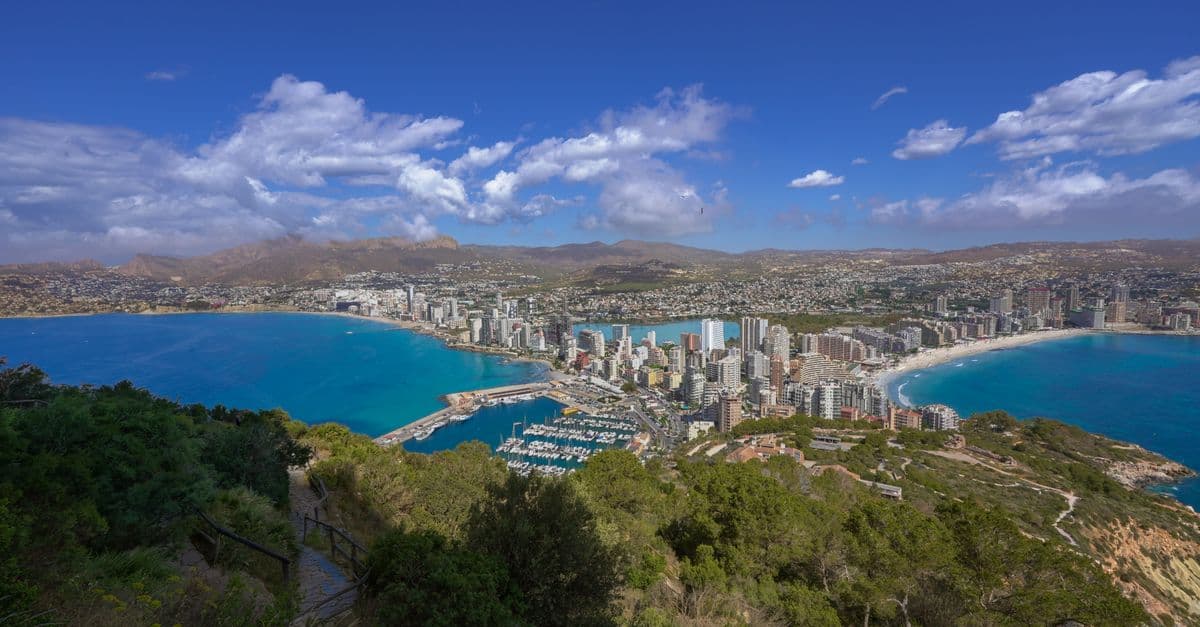
These towns are what people imagine when they say ‘Costa Blanca charm’: narrow old towns, sea promenades and a higher proportion of northern European residents. Healthcare access is good, but private clinics are more common than big public hospitals. Calpe and Moraira are quieter than Benidorm and have a higher cost-of-entry for property.
Benidorm and Villajoyosa
Benidorm is busy, open late, with lots of private clinics, shops and flights. It’s noisy in summer in the tall-hotel areas (Rincón de Loix) but has pockets — Old Town, Poniente — that are manageable and popular with active retirees. Villajoyosa is quieter, with a nice seafront and local flavour.
Torrevieja, Orihuela Costa and Guardamar
These are the lower-cost coastal options. Torrevieja has the biggest British community on the southern Costa Blanca and loads of British services, but the town is quite urban and parts are busy in summer. Guardamar offers big dunes and quieter beaches. Expect bargains on two-bedroom apartments, but also expect many urbanisations with identical blocks — not everyone finds that charming.
Which neighbourhood suits which budget — concrete examples
Prices move year to year, but the pattern is stable: the north (Jávea, Denia) and small coastal gems (Altea, Moraira) are premium; Alicante city and Benidorm are mid-range; Torrevieja, Orihuela Costa and inland villages are cheapest. Buying costs add roughly 10–13% on top of the purchase price for taxes, notary and registration — check current rates with a gestor before you sign.
Budget under €1,000/month (rent) or tight-buying
- Torrevieja: older two-bed flats, further from the centre, or first-floor apartments with no lift.
- Orihuela Costa: holiday buildings and resale bargains, but check comunidad fees.
- Villages inland: Algorfa, Quesada, Catral — lower rents and larger houses, but you’ll drive more.
Comfortable lifestyle €1,000–€2,000/month
- Alicante city and Playa de San Juan: one-bedroom apartments near the beach, easy access to shops and hospitals.
- Denia (outside peak spots) and Calpe (non-seafront): better quality homes and active expat scenes.
- Villajoyosa and El Campello: quieter coastal living with good links to Alicante.
Premium €2,000+/month or higher home purchase
- Jávea (Port and northern coves), Altea (old town and Altea Hills), Moraira: sea views, villas, gated communities.
- New-builds on prime promenades — you pay for location and the upkeep of luxury communal gardens and pools.
Healthcare access — what to expect and what to arrange first
Healthcare on the Costa Blanca is good: the Region of Valencia runs the public system here, and there are capable public hospitals in Alicante, Elche and Denia plus many private clinics. But the timing depends on your immigration status.
If you’re moving on a non-lucrative visa (EX-01 at your consulate) you’ll need a private health policy acceptable to the Spanish consulate — that usually means no co-pay and full Spanish coverage from the visa start date. Expect higher premiums if you’re over 65 or have pre-existing conditions; a realistic range in 2026 is €100–€300/month per person, sometimes more. Check the policy carefully — the consulate reads the small print.
Once you’re resident and registered (empadronamiento) and have your NIE/TIE you can register with the Conselleria and get the tarjeta sanitaria. The office handling registrations is the local health department office; many towns have a “Centro de Salud” that directs you. If you have pension credits or are registered with Spain’s social security, you’ll also need to link that.
Official signposts: for visa rules use the Ministry of Foreign Affairs (exteriores.gob.es) and for social security registration look at the Tesorería on seg-social.es. For regional procedures check the Valencia health pages — processes and documents vary slightly between provinces.
If you have continuing care needs (regular hospital clinics, dialysis), map those clinics from the start. People who pick a town because it’s pretty and then find their specialist is two hours away tend to move again.
Pros and cons — the real trade-offs
Pros
- Climate: mild winters and excellent autumn and spring walking weather.
- Flight access: short hops to the UK and much of Europe from Alicante airport.
- Choice of lifestyle: busy resort towns, small fishing villages or quiet inland life within 30 minutes of a good hospital.
- English services: many towns have English-speaking doctors, dentists and community groups.
- Cost flexibility: you can live well on a modest pension if you choose smaller towns inland.
Cons
- August crowds and heat: coastal towns fill in July–August; traffic and noise rise sharply.
- Winter emptiness: small resort shops and restaurants close in low season, which can feel isolating if you wanted a year-round social life.
- Paperwork friction: registering for residency, health care and opening Spanish bank accounts takes time and patience.
- Community fees and repairs: owners of flats on the coast can pay significant comunidad fees and periodic building repairs (façade lifts, pool renewals).
- Language: you’ll get by without fluent Spanish in many towns, but administrative and medical appointments are easier if you do learn it.