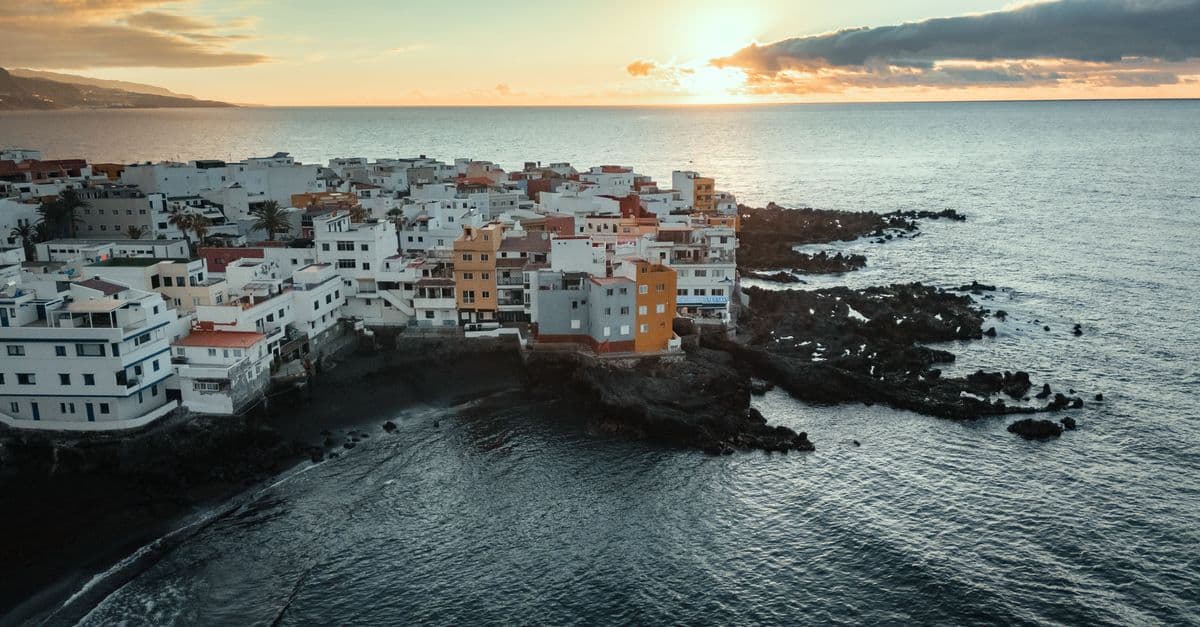
Quick comparison
| Criterion | North Tenerife | South Tenerife |
|---|---|---|
| Climate | Greener, cooler, more clouds and more rain in winter | Warmer, drier, more consistent sunshine year-round |
| Typical rents (1-bed, town) | €600–€900/month (Puerto de la Cruz, La Orotava) | €800–€1,200/month (Costa Adeje, Los Cristianos) — higher in prime areas |
| Property prices | Lower on average; inland bargains | Higher — tourist demand pushes prices up |
| Healthcare & private clinics | Good local primary care; fewer private hospitals | More private clinics and specialists; easier access to private healthcare |
| Flights & connectivity | Good access to TFN (Tenerife North); fewer direct international flights | Best international connections through TFS (Tenerife South) |
| Expat services & English | Smaller expat pockets; slower English service | Stronger English presence: banks, lawyers, estate agents and shops |
| Tourism & noise | Calmer, more local; seasonal tourism but quieter nightlife | Busy, tourist-focused, nightlife and restaurants geared to visitors |
| Outdoor options | Excellent hiking, laurel forests, botanical gardens | Beaches, coastal promenades, boat tours, diving |
Start here: the situation you probably recognise
You’ve read the photo-heavy posts extolling Tenerife’s sunshine. You’ve also seen adverts for apartments in Costa Adeje and thought: that looks perfect. Then you looked at a map and realised the island is split — the north is green and misty; the south is flat and sun-baked. Which side do you put your money and your life on?
If you want a clear answer you can act on, here it is: most retirees are happier in the south because it keeps things simple — more sun, faster private healthcare access, and an English-speaking infrastructure that makes the early months easier. But the north is the right choice if you prioritise lower prices, quieter streets and a more Canarian rhythm of life. I’ll explain the trade-offs, the real costs, and the traps people miss.
Climate and daily comfort: what the microclimate actually means
Tenerife’s weather is famously varied. The north faces the trade winds and gets more cloud and winter rain; the south sits in a rain shadow and keeps bright blue skies most of the year. That’s not fluff — it changes daily life.
If you crave reliable sun for walking, pools and patios, the south wins hands down. For people with joint problems who say “I need warmth,” sun and dryness matter. You’ll likely need less heating in a south-facing apartment. If you like green scenery, gardens and morning mists on terraces, the north gives you that. Expect more cloud cover and cooler mornings there, especially November–February.
Practical note on heating. South-facing flats still can be chilly at night in winter — insulation and a small electric panel heater or a reverse-cycle aircon are often enough. In the north you may want a more reliable heating plan: electric radiators or a pellet stove in a villa. See our guide on heating for homes in Spain for specifics (/en/housing/spain-heating-winter-homes).
Cost: rents, buying, running costs and what drives them up
The cost differential is real, but not huge. As of 2026 typical advertised rents for a furnished one-bedroom in town run roughly €600–€900/month in the north (Puerto de la Cruz, La Orotava) and €800–€1,200 in the south (Los Cristianos, Costa Adeje). Prime sea-view apartments in the south can push €1,500+ in high season. If you’re buying, expect transaction costs — taxes, notary, registry and agent — of roughly 10–13% on top of the purchase price. That’s the number that hits people who buy too fast.
What pushes costs up: proximity to the coast, a sea view, terrace space and English-friendly management (community fees tend to be higher in well-kept tourist estates). Utilities are moderate: electricity in Tenerife still runs higher than mainland Spain because of island fuel logistics, so budget €60–€120/month for an active household (aircon/heating drives this). Water normally sits under €40/month for a couple, but community fees and elevator maintenance can add €40–€150/month depending on the building.
Healthcare insurance: if you arrive on a non-lucrative visa you must show private health cover acceptable to the consulate. For a healthy 65-year-old expect roughly €90–€200/month per person depending on insurer and cover — the older you are and the more pre-existing conditions you have, the higher the premium. The consulate reads the policy carefully; simple inexpensive plans can be rejected. Start checking policies early and compare quotes. See our Tenerife healthcare guide for provider notes (/en/healthcare/healthcare-tenerife-retirees).
Trap: the private-insurance wording for the visa. Consulates require cover with no co-pay and full Spanish territory coverage — not just European. Cheap plans often exclude outpatient or include excesses that invalidate the visa. Get the insurer’s confirmation in writing and have it translated if needed; you’ll be asked for this at the consulate. For official visa requirements see exteriores.gob.es.
Healthcare, services and travel: how quickly you get what you need
Healthcare access is the reason many pick the south. Private clinics, specialists and English-speaking GPs concentrate around Costa Adeje and Playa de las Americas. If you want short appointments, easy referrals and private tests, the south is faster. The north has good primary care and friendly local doctors, but fewer private specialists — that means longer waits or a drive south.
Public healthcare for residents becomes available once you’re registered, paying into or linked with the Spanish system — a process that takes time and paperwork. If you rely on private care initially, factor private insurance into the first-year budget. For how residency interacts with healthcare and social security see seg-social.es.
Flights and travel: Tenerife South airport (TFS) has the best international connections — direct flights from many UK airports year-round and seasonal services from mainland Europe. Tenerife North (TFN) is closer to Santa Cruz and La Laguna and handles more domestic and some international flights. If getting on a plane quickly matters (family visits, tests, specialists), live within an hour of TFS.
Public transport is decent: the interurban buses (TITSA) link north and south, but schedules slow down outside high season. If you’re planning day-trips or hospital visits, owning a car speeds things enormously. Our flights/connectivity article has the routes broken down by origin country (/en/living-in-spain/flights-connectivity-spain-regions).