Key takeaways
- Expect one-bed city-centre rents roughly €700–€1,000 and two-beds €900–€1,400 (see the caveats on condition, season and exact barrio).
- Ruzafa, Eixample/Gran Vía and Pla del Real suit the socially active retiree; Cabanyal and Patacona are for beach lovers; Benimaclet and Campanar are more affordable.
- You must show private health insurance for a non‑lucrative visa; public healthcare is straightforward once you’re registered with Seguridad Social — get the insurance quotes early.
- Common mistakes: buying too quickly and signing long leases sight unseen. Rent for a year first and check energy bills — summer A/C use will double your electricity cost.
Short answer first: yes, Valencia is a realistic and comfortable place to rent as a retiree. The city gives you better value than Madrid or Barcelona, plenty of amenity-rich neighbourhoods and a good airport link; read on for the catches and the how-to.
What living in Valencia actually feels like
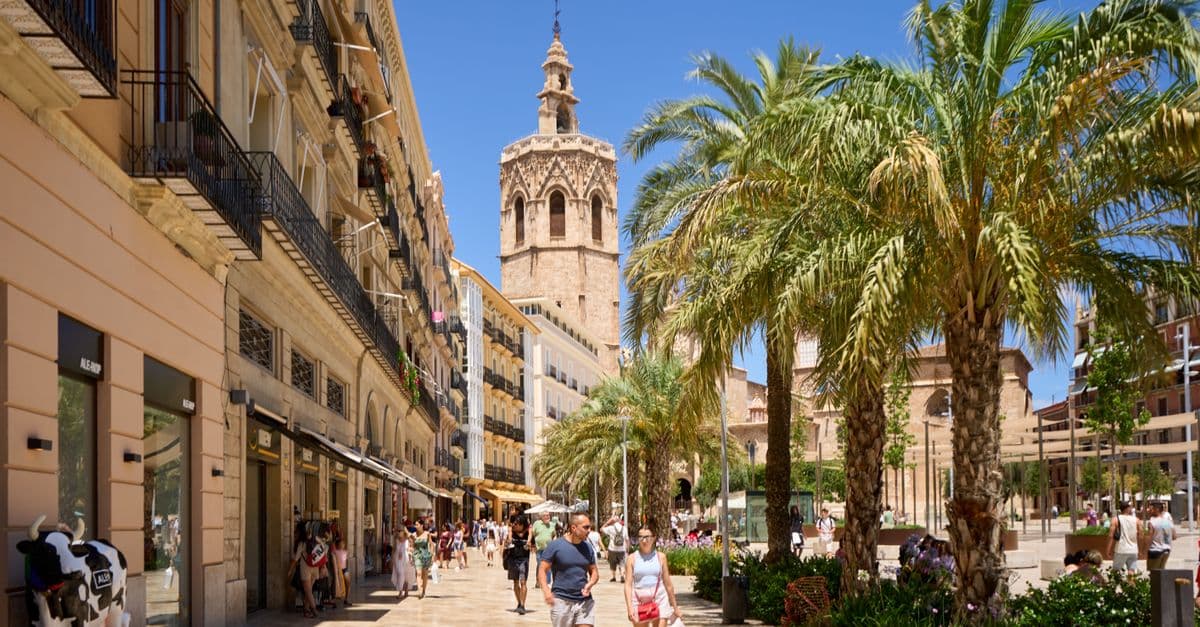
Valencia is a mid-sized Spanish city. It’s six months busy and relaxed, three months loud (Fallas in March is intense) and a long, hot August when many small shops and restaurants close for holiday. The city is flat and easy to walk or cycle; the Turia park runs through the centre and gives you a long green strip for morning walks. The Mediterranean is a ten-to-25-minute tram ride from most central neighbourhoods.
Spanish and Valencian are both official. You will manage with English in tourist-facing areas and many private clinics, but everyday forms, banks and small shops expect Spanish. Learn the basics — it makes errands and friendships easier.
Transport is user-friendly: trams, buses and a metro network link central neighbourhoods and suburbs. Parking is tight in the old town, so if you need a car budget for a resident parking permit or a private garage to guarantee a space. Noise is a real trade-off: old-town living (Ciutat Vella / El Carmen) places you steps from cafés and nightlife; quieter streets are found in Pla del Real and parts of El Grau.
Prices: what landlords actually ask (and the catches)
Numbers first, then caveats. As of early 2026 you’ll typically see these long-term rental ranges inside the city limits, but prices vary by property condition, exact street and whether utilities or community fees are included.
- Small 1‑bed (city centre, furnished, modern): €700–€1,000/month.
- 1‑bed in trendy Ruzafa or renovated Ciutat Vella: €850–€1,200/month.
- 2‑bed (central, decent condition): €900–€1,400/month.
- Beach neighbourhoods (Cabanyal/La Malvarrosa/Patacona): similar to central for small flats, but larger or seafront units can be €1,000–€1,600.
- Cheaper outskirts (Paterna, Torrent, parts of Campanar): €600–€850 for 1–2 beds, with longer commutes.
Now the catches. Some flats quote rent excluding community fees (comunidad) and water. Expect an extra €50–€120/month for community plus water for a typical flat; add more in buildings with lifts, pools or communal heating. Electricity is the real variable. In summer, heavy A/C use can push a monthly bill from €60 to €150–€250 depending on insulation and tariff.
Most landlords ask for one to two months’ deposit. If you rent through a private agency you may pay their fee (commonly one month’s rent) unless the ad says ‘no agency fee’. Read the contrato and ask whether the rent includes internet and whether there are limits on visitors or subletting.
Many quality flats are offered only as long-term rentals. If you want flexibility, budget for a slightly higher short-term rent or plan to use Airbnb while you search for a long-term place in person.
Which neighbourhood fits your budget and lifestyle
I’ll be frank: neighbourhood choice matters more than the price. Nearly every retiree I’ve met regretted their chosen barrio more often than the rent. Below are the parts of town I’d recommend based on what you’re after.
For café life, restaurants and expat social life: Ruzafa
Why: lively, lots of cafés, small galleries, weekly markets and a strong expat presence. Flats are often renovated old buildings — expect higher prices for modern finishes. You’ll find English speakers at many cafés and at local meet-ups, so it’s an easy place to make connections.
For quiet, green spaces and an easy walkable life: Pla del Real & Campanar
Why: Pla del Real borders the Turia park, offering quiet streets, good local shops and easy access to green space. The university area is calm outside term time. Campanar is similar and typically a little cheaper; both are good if you want fewer late-night bars nearby.
For beaches and a local coastal feel: Cabanyal / La Malvarrosa / Patacona
Why: morning sea air, seafood restaurants and promenades. Cabanyal has been gentrifying and offers a mix of old fishermen’s houses and renovated apartments. Patacona and Alboraya are more residential and quieter, but further from central services.
For value and a community vibe: Benimaclet & outer Campanar
Why: bohemian, university-influenced areas with a village feel and better value. Benimaclet’s younger crowd means cafés and cultural events; there are quieter pockets for retirees who want to avoid tourist crowds.
For classic city-centre life: Ciutat Vella / El Carmen / Eixample
Why: you’re in the middle of everything — museums, the Turia, markets and restaurants. Expect noise and tourists on weekends. Choose a flat on a quieter side street or inside a courtyard, and check for double glazing before you sign.
Healthcare, paperwork and practical permissions
Two quick facts that guide decisions. For any Spanish long‑stay visa (non‑lucrative, for example) the consulate will want private health insurance that meets their rules. Once you’re resident and registered with Seguridad Social you can use the public healthcare system. Get private insurance quotes early; policies for people over 65 cost more and some insurers exclude pre-existing conditions.
Useful internal reads: our piece on non‑lucrative visa health insurance and the public healthcare primer at Public healthcare for retirees explain the timeline and options. Official processes (appointments, registration forms) are regional, and Valencia’s paperwork is efficient, but the first few visits still take time.
Private centres in the city have English-speaking doctors. Public hospitals such as Hospital Universitari i Politècnic La Fe and Hospital General Universitari provide high-quality care; wait times vary. If you plan to depend on private clinics for immediate access, budget those costs or choose a plan that covers private outpatient visits and no copay if that’s required by your visa paperwork. See our guide on insurance with no copay.
Pros and cons
Pros
- Lower rent than Madrid/Barcelona for similar quality and amenities.
- Flat, walkable city with a long park (Turia) and easy beach access.
- Good healthcare infrastructure: public hospitals and many private clinics with English-speaking staff.
- Strong local food culture — markets, cafés and inexpensive restaurants make social life easy.
- Short flights to the UK and much of Europe from Valencia airport (Manises).
Cons
- August emptiness: many small shops and services close for a few weeks; plan essentials in July.
- Hot summers: A/C is almost mandatory and energy bills can spike if insulation is poor.
- Tourist and festival noise: Fallas in March is spectacular but noisy, with fireworks and crowds.
- Parking and traffic in the old town are difficult; if you rely on a car, budget for a garage or permit.